Understanding the Latest Fire Safety Regulations in 2026
11 May 2026
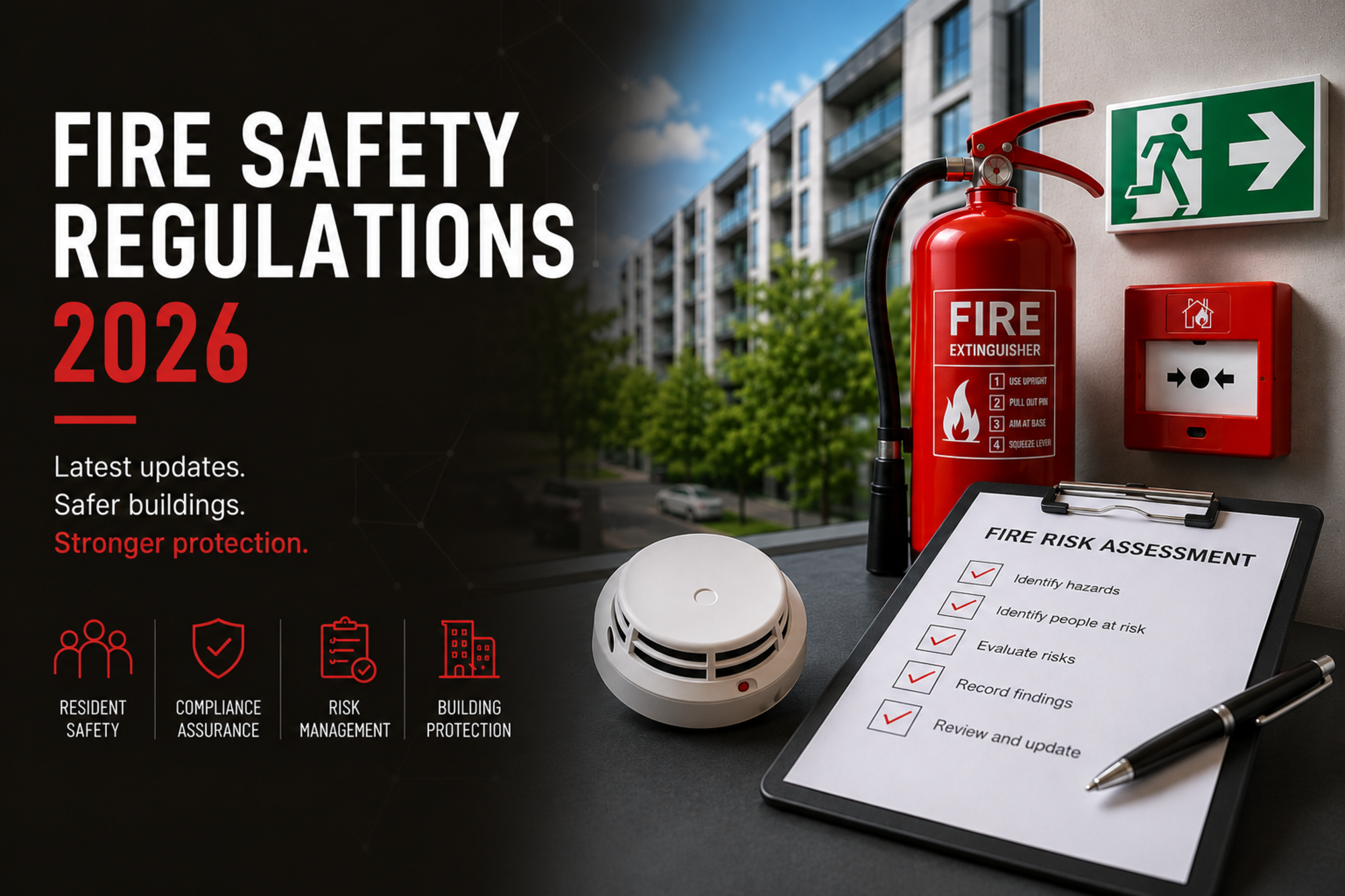
Fire safety legislation across the UK continues to evolve at pace, with 2025 and 2026 bringing some of the most significant regulatory changes seen in recent years. Driven by an ongoing commitment to improving building safety standards and protecting vulnerable occupants, the latest updates place greater responsibility on building owners, landlords, managing agents and Responsible Persons to adopt more proactive, transparent and person-centred approaches to fire safety management.
From enhanced evacuation planning requirements to stricter testing standards and increased record-keeping obligations, the direction of travel is clear: fire safety is no longer simply about compliance, it’s about accountability, communication and long-term risk reduction.
Person-Centred Evacuation Planning Takes Centre Stage
One of the most notable recent developments is the implementation of the Fire Safety (Residential Evacuation Plans) (England) Regulations 2025. The regulations introduce mandatory person-centred fire risk assessments and evacuation plans for residents who may require assistance during an emergency evacuation.
Under the new requirements, Responsible Persons, including landlords and managing agents, must identify vulnerable occupants and ensure suitable evacuation arrangements are both documented and regularly reviewed. This represents a major shift in how residential fire safety is managed, moving away from a one-size-fits-all approach towards tailored planning that considers individual needs and circumstances.
The regulations reinforce the importance of communication between building management teams, residents and emergency services, ensuring that evacuation procedures are practical, accessible and effective in real-world scenarios.
Continued Updates to Approved Document B
Approved Document B, which provides guidance on fire safety requirements within the Building Regulations, continues to undergo significant updates throughout 2026.
Amongst the key changes is the introduction of mandatory sprinkler systems in all new care homes. The move reflects growing recognition of the importance of active fire suppression systems in protecting vulnerable residents and reducing the spread of fire in high-risk environments.
These updates also continue to strengthen expectations around compartmentation, means of escape, material performance and overall building resilience. As regulations evolve, developers, contractors and facilities providers are being encouraged to adopt fire safety considerations earlier in the design and operational lifecycle of buildings.
The Transition Away from BS 476 Fire Testing Standards
Another important milestone within the industry is the final withdrawal of legacy BS 476 fire testing standards, with the BS EN 13501 European classification system now becoming the recognised benchmark for assessing material fire performance.
The transition aims to improve consistency, transparency and comparability across construction products and fire-resistant materials. For manufacturers, specifiers and building operators, this means ensuring that products and systems meet the latest recognised testing classifications and certification requirements.
The change also reflects wider industry efforts to modernise fire safety standards and align with more robust testing methodologies.
Greater Accountability Under the Building Safety Act
Section 156 of the Building Safety Act 2022 remains a major focus area in 2026, continuing to drive improvements in fire safety management across regulated premises.
The legislation places increased emphasis on the recording, sharing and management of fire safety information, alongside stronger cooperation requirements between multiple Responsible Persons operating within the same building.
Digital record-keeping is also becoming increasingly important, helping to create clearer audit trails, improve transparency and ensure critical safety information remains accessible throughout a building’s lifecycle.
For many organisations, this means reviewing existing fire safety procedures, documentation processes and communication strategies to ensure ongoing compliance with evolving legal expectations.
Increased Focus on Fire Door Safety
Fire doors continue to receive heightened attention across the sector, with strengthened guidance around inspection and maintenance responsibilities.
Current requirements place greater emphasis on quarterly inspections of communal fire doors, alongside annual checks of flat entrance doors within residential buildings. These inspections are essential in ensuring fire doors remain fit for purpose and capable of preventing the spread of smoke and fire during an emergency.
Regular maintenance, accurate record-keeping and prompt remedial action are all critical components of effective fire door management, particularly within high-occupancy residential environments.
A Changing Landscape for Building Safety
The latest regulatory developments demonstrate a clear and ongoing shift towards higher standards of accountability, transparency and resident protection across the built environment.
As fire safety legislation continues to evolve, organisations responsible for buildings must remain proactive in understanding new requirements, reviewing existing procedures and investing in compliant, future-focused safety strategies.
Ultimately, these changes are designed not only to improve compliance, but to help create safer buildings, stronger operational practices and greater confidence for residents, occupants and stakeholders alike.
At Evotech Fire & Security, we understand that navigating evolving fire safety legislation can be complex and time-consuming for building owners and Responsible Persons. Our specialist teams support clients through every stage of compliance, from comprehensive asset management and planned maintenance scheduling through to detailed reporting and documentation via our CAFM system.
By maintaining accurate digital records, monitoring asset performance and keeping fully up to date with the latest regulatory changes, we help ensure our clients’ buildings remain compliant, operationally efficient and, most importantly, safe for occupants at all times.

Evotech Achieves Prestigious CIBSE Endorsed Organisation Status
Read More >

£1.5 Billion NHS Investment Highlights the Importance of Fire Safety and Resilient Estates
Read More >

Outstanding Audit Results for Evotech Engineers at Chapel & Friary Walk Shopping Centre
Read More >
The Essential Fire Safety Compliance Checklist for Commercial Buildings
Read More >