Second-staircase guidance takes effect in England
5 Oct 2026
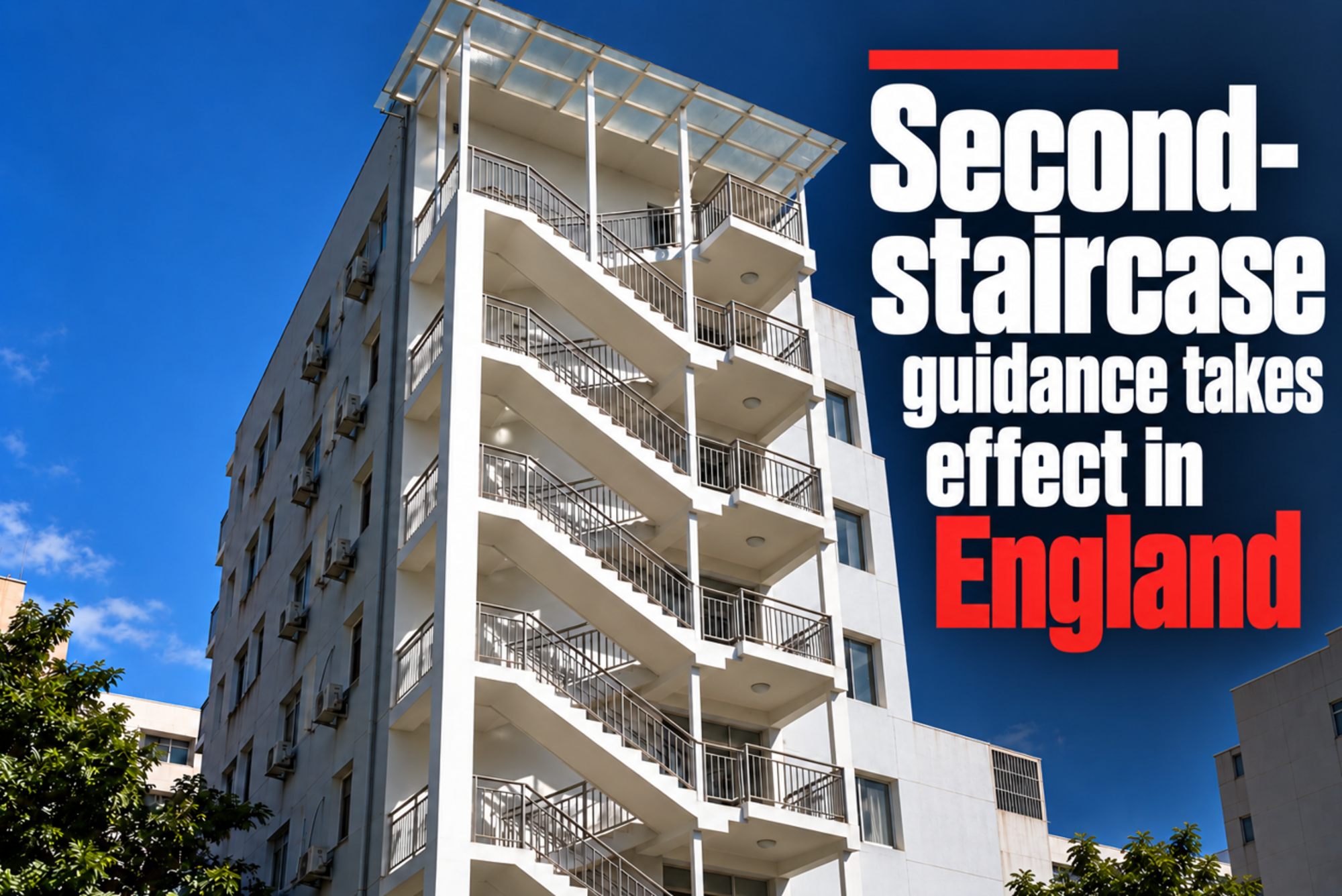
Updated fire-safety guidance recommending a second staircase in blocks of flats with a storey at least 18 metres above ground level took effect in England on 30 September 2026.
The amendments to Approved Document B mark an important change for residential development, introducing the new staircase threshold and provisions for evacuation shafts to support evacuation lifts where these are provided. Published in March 2024, the guidance is now effective following its transition period.
The government’s stated aim is to provide additional evacuation capacity where a building’s ‘stay put’ strategy needs to be overridden. For developers and building owners, the change reinforces the importance of considering escape arrangements as part of a coordinated fire-safety strategy.
Understanding the transitional arrangements
Projects with a qualifying building control application or notice submitted before 30 September 2026 may continue under the previous guidance, provided the relevant work meets the specified conditions for sufficient progress within the 18-month transition window.
For new construction, sufficient progress means starting the permanent placement of piling or pouring concrete for permanent foundations. Planning permission alone does not establish eligibility under these arrangements. The guidance applies to England with different regulatory frameworks operating elsewhere in the UK.
Coordinating building design and operational safety
For project teams, the practical implications extend beyond the staircase layout. Fire detection, smoke control, fire doors and other protective measures need to work together in accordance with the building’s approved fire strategy. Early coordination between designers, specialist contractors and those responsible for managing the completed building can help ensure that installation, commissioning and handover arrangements support its intended operation.
For facilities managers, accurate records and clear maintenance responsibilities remain essential. Understanding how safety systems interact supports effective inspection, testing and fault management throughout the building’s operational life.
The change should not be interpreted as a blanket instruction to retrofit a second staircase into every existing residential block. Its application depends on the proposed building work and relevant approval arrangements. Existing buildings continue to require appropriate fire-risk management.
Evotech Fire & Security supports building owners and managers through the servicing, maintenance and installation of fire-safety systems. Working alongside clients and project teams, our focus is on reliable system operation, clear technical records and maintenance arrangements that support ongoing building safety.
Fire Door Safety Week highlights worrying generational gaps in fire door awareness
Read More >

Evotech Achieves Prestigious CIBSE Endorsed Organisation Status
Read More >
£1.5 Billion NHS Investment Highlights the Importance of Fire Safety and Resilient Estates
Read More >

Outstanding Audit Results for Evotech Engineers at Chapel & Friary Walk Shopping Centre
Read More >