The Essential Fire Safety Compliance Checklist for Commercial Buildings
14 Jul 2026
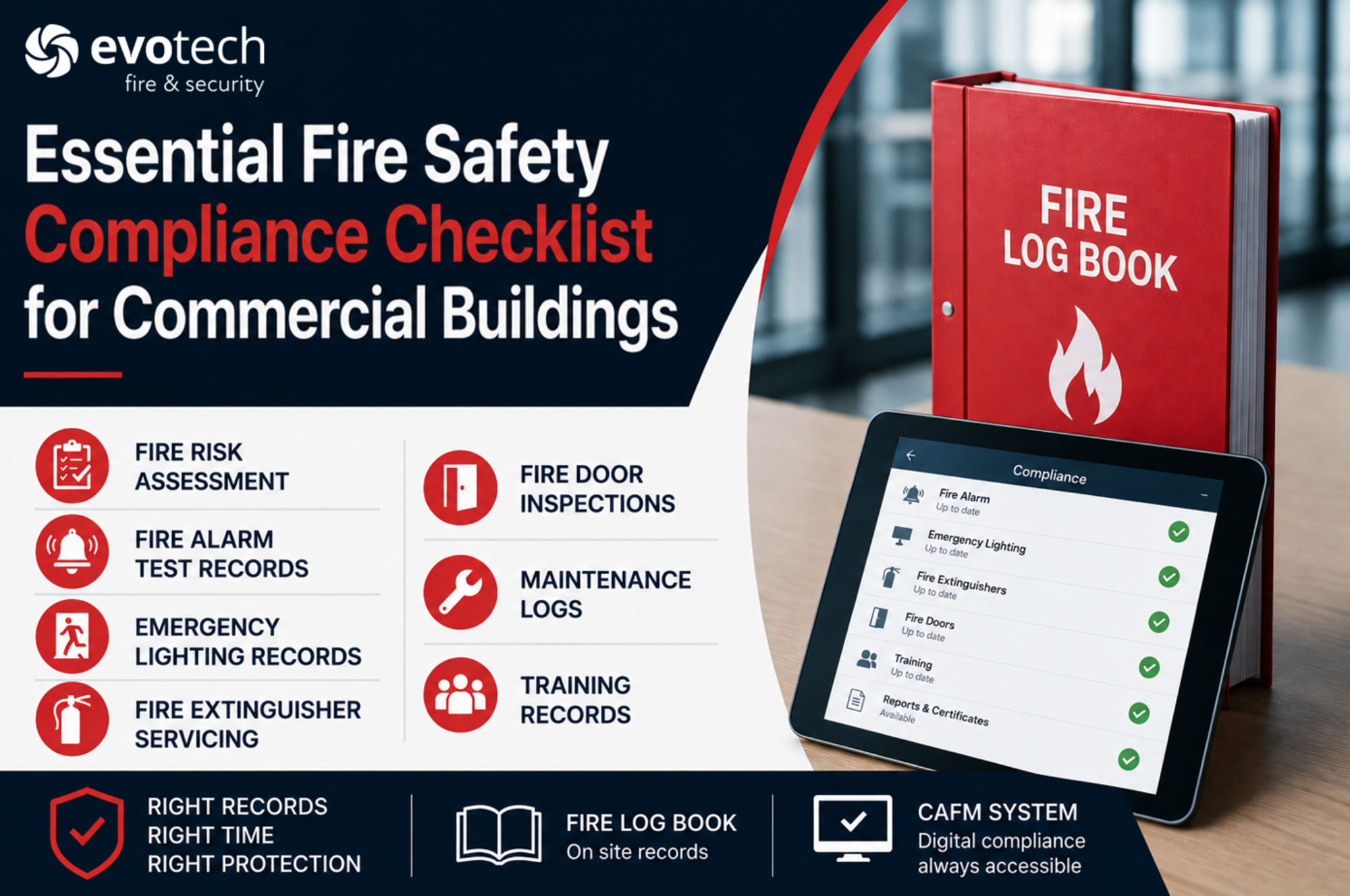
Effective fire safety management extends far beyond maintaining alarms and extinguishers. Behind every compliant commercial building is a comprehensive set of records that demonstrate fire protection systems have been inspected, maintained, tested and managed correctly.
Whatever commercial property you're responsible for, maintaining accurate fire safety documentation is essential for legal compliance, insurance requirements and, most importantly, protecting the people who occupy your building.
At Evotech Fire & Security, we regularly support facilities managers who inherit incomplete records or discover important documentation is missing during audits. Having the right information readily available can make all the difference during inspections, insurance claims or emergency situations.
Why Fire Safety Records Matter
The Regulatory Reform (Fire Safety) Order 2005 places a legal duty on the Responsible Person to ensure that appropriate fire precautions are provided, maintained and, where required, documented. The Building Safety Act 2022 has further reinforced the importance of maintaining accurate and accessible information for those responsible for managing higher-risk buildings.
Article 17 of the Fire Safety Order requires fire safety equipment and devices to be subject to a suitable system of maintenance and kept in an efficient state, in working order and in good repair. During inspections, enforcing authorities may request evidence that these duties are being met, making accurate record keeping an essential part of fire safety management.
Many maintenance and inspection requirements are also defined within British Standards, including BS 5839-1 for fire alarm systems, BS 5266-1 for emergency lighting, BS 5306-3 for portable fire extinguishers and BS 9999 for fire safety management. Maintaining records in accordance with these recognised standards demonstrates good practice and provides valuable evidence during audits, insurer inspections and Fire and Rescue Service visits.
Accurate documentation demonstrates that:
- Fire protection systems have been inspected, tested and maintained correctly.
- Defects have been identified, recorded and rectified
- Staff have received appropriate fire safety training
- Fire precautions are being actively managed
- Legal responsibilities are being fulfilled
Good record keeping also helps facilities managers identify recurring issues, plan preventative maintenance, budget for future works and demonstrate compliance with confidence.
Fire Log Books and Digital Compliance Management
For many years, commercial buildings have relied on fire log books to record weekly fire alarm tests, emergency lighting checks, maintenance visits, fire drills and other routine fire safety activities. A well-maintained fire log book remains an invaluable on-site reference, providing a chronological record of the building's fire safety management.
Increasingly, organisations are complementing or replacing paper records with digital compliance management through a Computer Aided Facilities Management (CAFM) system. By storing maintenance reports, inspection records, certificates, photographs and remedial actions electronically, facilities managers have instant access to their fire safety documentation whenever it is required.
Using a CAFM system provides several benefits, including:
- Immediate access to compliance documentation from any authorised location
- Secure storage of historical records and certificates
- Automatic scheduling of statutory inspections and maintenance
- Complete asset maintenance histories
- Simplified audit preparation
- Greater visibility across multiple properties
- Reduced risk of paperwork being lost or damaged
Many organisations choose to maintain both an on-site fire log book for routine operational records and a CAFM system for securely storing all compliance documentation. This approach creates a comprehensive audit trail that demonstrates compliance with the Fire Safety Order and relevant British Standards, whilst ensuring information is always readily available during inspections by the Fire and Rescue Service, insurers or third-party auditors.
The Essential Fire Safety Documentation Checklist
1. Fire Risk Assessment
A suitable and sufficient Fire Risk Assessment forms the foundation of every building's fire safety strategy. Under Article 9 of the Regulatory Reform (Fire Safety) Order 2005, the Responsible Person must carry out a Fire Risk Assessment and keep it under review. The assessment should identify fire hazards, evaluate risks and detail the measures required to reduce those risks.
Ensure your records include:
- Current Fire Risk Assessment
- Identified hazards and risks
- Recommended actions
- Evidence that actions have been completed
- Dates of review and reassessment
Fire Risk Assessments should be reviewed regularly and whenever significant changes are made to the building, occupancy or fire protection systems.
2. Fire Alarm Certificates and Test Records
Fire alarm inspection, servicing and record keeping are covered by BS 5839-1:2017, which recommends weekly user testing, periodic servicing by competent engineers and maintaining accurate records.
Maintain:
- Installation certificates
- Commissioning certificates
- Weekly fire alarm test records
- Planned maintenance reports
- Fault reports
- Repair records
- System modification records
Weekly tests are typically recorded within the building's fire log book, whilst service reports and certificates should also be stored electronically within the CAFM system to create a permanent and searchable compliance record.
3. Emergency Lighting Records
Emergency lighting is essential for ensuring occupants can safely evacuate during a power failure. BS 5266-1 recommends monthly functional tests and annual full-duration tests, with all inspections recorded and retained for future reference.
Documentation should include:
- Installation certificates
- Commissioning records
- Monthly test records
- Annual duration test reports
- Maintenance certificates
- Battery replacement records
- Repairs and remedial works
Recording these inspections within both the site fire log book and CAFM system provides a complete maintenance history.
4. Fire Extinguisher Servicing Records
Portable fire extinguishers should be serviced annually by a competent person in accordance with BS 5306-3:2017.
Maintain records of:
- Extinguisher locations
- Asset identification
- Service certificates
- Maintenance reports
- Replacement dates
- Discharge incidents
- Condemnation or disposal records
These documents should be readily accessible to demonstrate compliance during inspections or insurance audits.
5. Fire Door Inspection Records
Fire doors are one of the most important passive fire protection measures within any commercial building. Under the Fire Safety Order, Responsible Persons must ensure fire doors are maintained in an efficient state and good repair. BS 9999 also recommends regular inspections to identify defects before they compromise compartmentation or means of escape.
Inspection records should include:
- Door identification
- Inspection dates
- Condition of doors and frames
- Self-closing devices
- Intumescent and smoke seals
- Glazing condition
- Ironmongery checks
- Repairs completed
- Outstanding defects
Digital inspection reports supported by photographs provide valuable evidence of ongoing maintenance and remedial works.
6. Planned Maintenance Logs
Article 17 of the Fire Safety Order requires fire safety equipment and devices to be maintained in efficient working order. Comprehensive maintenance logs demonstrate that this legal duty is being fulfilled and provide a complete history of every fire safety asset.
Maintain records of:
- Planned Preventative Maintenance (PPM)
- Engineer service reports
- Reactive maintenance visits
- Fault rectification
- Replacement equipment
- Outstanding remedial actions
A CAFM system enables these records to be linked directly to individual assets, creating a complete lifecycle history for every fire safety system within the building.
7. Fire Safety Training Records
Fire safety equipment is only effective if building occupants understand how to respond during an emergency. Article 21 of the Fire Safety Order requires employees to receive adequate fire safety training. Maintaining accurate training records provides valuable evidence that these responsibilities are being met.
Keep records covering:
- Fire awareness training
- Fire marshal training
- New starter inductions
- Evacuation exercises
- Fire drill reports
- Attendance registers
- Refresher training
These records should be retained within both the fire log book (where appropriate) and the CAFM system as part of the building's wider compliance documentation.
Additional Documentation Worth Keeping
Many organisations also maintain:
- Evacuation plans
- Personal Emergency Evacuation Plans (PEEPs)
- Fire strategy drawings
- Cause and effect documentation
- Fire safety asset registers
- Contractor maintenance schedules
- Insurance inspection reports
- Compliance certificates
- Photographic records of remedial works
Keeping all documentation together makes inspections, audits and compliance reviews significantly easier.
How Evotech Fire & Security Can Help
Managing fire safety documentation across multiple sites can be challenging, particularly where several contractors are responsible for different fire protection systems.
At Evotech Fire & Security, every inspection, maintenance visit and service activity is fully documented. Whether your organisation uses traditional on-site fire log books, a CAFM system, or a combination of both, we ensure all statutory maintenance records, inspection reports and compliance certificates are completed accurately and are readily available whenever required.
Our planned maintenance programmes support compliance with the Regulatory Reform (Fire Safety) Order 2005 and the relevant British Standards, giving facilities managers complete confidence that their fire safety documentation is organised, up to date and easily accessible.
Whether you require fire alarm maintenance, emergency lighting testing, fire extinguisher servicing, fire door inspections or a fully managed Planned Preventative Maintenance programme, Evotech Fire & Security provides the technical expertise and comprehensive documentation needed to help keep your buildings compliant, your occupants safe and your compliance records inspection ready.
Need Help Reviewing Your Fire Safety Records?
If you're unsure whether your fire safety documentation is complete, compliant or readily accessible, Evotech Fire & Security can help. Our experienced engineers can review your existing records, identify any gaps and provide fully documented maintenance services that simplify audits, support statutory compliance and give you complete confidence in your fire safety management.

Evotech Achieves Prestigious CIBSE Endorsed Organisation Status
Read More >

£1.5 Billion NHS Investment Highlights the Importance of Fire Safety and Resilient Estates
Read More >

Outstanding Audit Results for Evotech Engineers at Chapel & Friary Walk Shopping Centre
Read More >
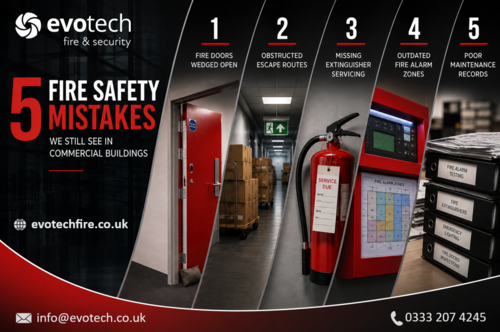
Five Fire Safety Mistakes We Still See in Commercial Buildings
Read More >